

.jpg)
In the world of B2B payments, a revolution is brewing. The last time the cross-border B2B payments industry saw a revolution was during the Society for Worldwide Interbank Financial Telecommunication (SWIFT) launch in 1973. Before SWIFT, international payments relied on a system of telex messages and physical checks, which was time-consuming, expensive, and prone to errors. SWIFT helped us go beyond.
With SWIFT, payment processing times were reduced to near real-time, and transaction costs were significantly lowered, making cross-border transactions more accessible and efficient for businesses worldwide. Over time, SWIFT has been crucial in accelerating global trade and commerce, particularly in the B2B payments market. SWIFT was able to accomplish lower settlement times and lower communication requirements, but it did not change the fundamental need for it.
Today, the interactions between global businesses have grown exponentially to the point where traditional Fintechs and SWIFT are rendered slow, inefficient, and expensive. They rely on banks and intermediaries and involve multiple currencies, which fluctuate in price constantly.
Traditional solutions fail to keep pace with the growing interactions between cross-border businesses. Bitcoin and the Lightning Network are poised to disrupt the traditional payment landscape, offering businesses a faster, cheaper, and more secure way to transact. Whether you’re exploring bitcoin for B2B use cases or looking to accept Lightning payments, these technologies provide a robust foundation. From integrating a B2B bitcoin payment gateway to choosing the right Bitcoin Lightning Network wallets, we’ll explore how they’re set to transform the industry and why businesses should take notice.
Lightning Network: The Game Changer
.jpg)
Benefits of accepting Bitcoin payments:
Reducing Transaction Fees: A Game-Changer for Businesses
Traditional payment processors charge businesses exorbitant fees for processing transactions. This can be a significant expense, especially for small and medium-sized businesses. With the Lightning Network, this issue is a thing of the past. By routing payments through a network of nodes, the Lightning Network eliminates the need for expensive transaction fees, allowing businesses to keep more of their hard-earned revenue.
Instant Settlements: A Boost for Cash Flow
Settlement delays can be a major headache for businesses, especially those relying on a steady cash flow. By enabling instant settlements, the Lightning Network allows businesses to access their funds quickly and securely without the need for intermediaries.
For a manufacturing company that relies on a just-in-time inventory system, receiving payments instantly allows it to replenish its inventory and maintain a steady production flow. This could be the difference between life and death for a small and medium business.
No borders: Access to a global market
Bitcoin is a global currency, and the Lightning Network allows businesses to accept customer payments worldwide. This can be a significant advantage for businesses that want to expand their customer base and tap into global markets. By integrating Bitcoin into payment systems, the business can also hire employees and freelancers from anywhere in the world without having to deal with hours of paperwork.
Eliminating complex compliance requirements
Businesses that operate in multiple jurisdictions face complex compliance requirements when moving money from one country to another. By using the Lightning Network, businesses can streamline their compliance processes and focus on what they do best—running their businesses.
While businesses can enjoy many benefits by adopting Bitcoin, they still tend to avoid it due to a few issues that need to be addressed before we see businesses’ next wave of adoption.
Let’s look at them one by one:
Complexity: The Lightning Network is a relatively new technology that requires a certain level of understanding to navigate. To accept payments in Bitcoin instantly, merchants would need to set up and run their Lightning node, maintain inbound and outbound liquidity, which has a learning curve and needs to be learnt. A merchant failing to maintain inbound liquidity would not be able to receive lightning payments. Various companies providing Lightning as a Service (LaaS) are trying to solve this.
Limited adoption: Because most businesses haven’t adopted Bitcoin yet, it is difficult to make purchases and pay bills from the accepted Bitcoin. Businesses that run on thin margins can hardly afford to save their revenue without using it for the operations of the business.
Volatility risk: Bitcoin is a volatile currency when measured in Euros. Since Euros are predominantly used as a medium of exchange by most people in Europe, this becomes important. Without instant off-ramping services, the merchants may see fluctuations in the value of their revenue, which may hinder smooth business operations.
Ineffective off-ramps: By extension of the issue of limited adoption, businesses need to be able to convert their Bitcoin earnings into Euros to make them usable. If these swaps cannot be done instantly and at a low cost, it becomes an added burden to the business. Effective off-ramp tools like Bringin are needed to protect businesses from volatility risk.
User experience: The user experience for Lightning payments can be challenging, particularly for customers who are not familiar with the interface. Most business are used to the banking experience and interface, which is different from that of most bitcoin and lightning service providers. This can lead to confusion and frustration, making it less likely that businesses will want to accept Lightning payments.
Any business engaging in high frequency micro transactions would be better off using lightning for payouts and payment receipts. There are many businesses building solutions to solve these issues, and are enabling the B2B payments ecosystem to thrive.
Ecosystem Enablers
Businesses have been using traditional payment systems for decades now, and bringing a fundamental change in the payment ecosystem from the ground up is a daunting task. People are willing to change their behaviour only if they see a significant benefit for themselves. Reduced fees, Global markets, faster settlements, reduced compliance, and Sovereignty are all enough benefits for a behavioural shift to happen.
Businesses building solutions to solve most of the issues mentioned above are called Ecosystem enablers, and they can be categorised into the following:
1. Lightning-as-a-Service (LaaS)
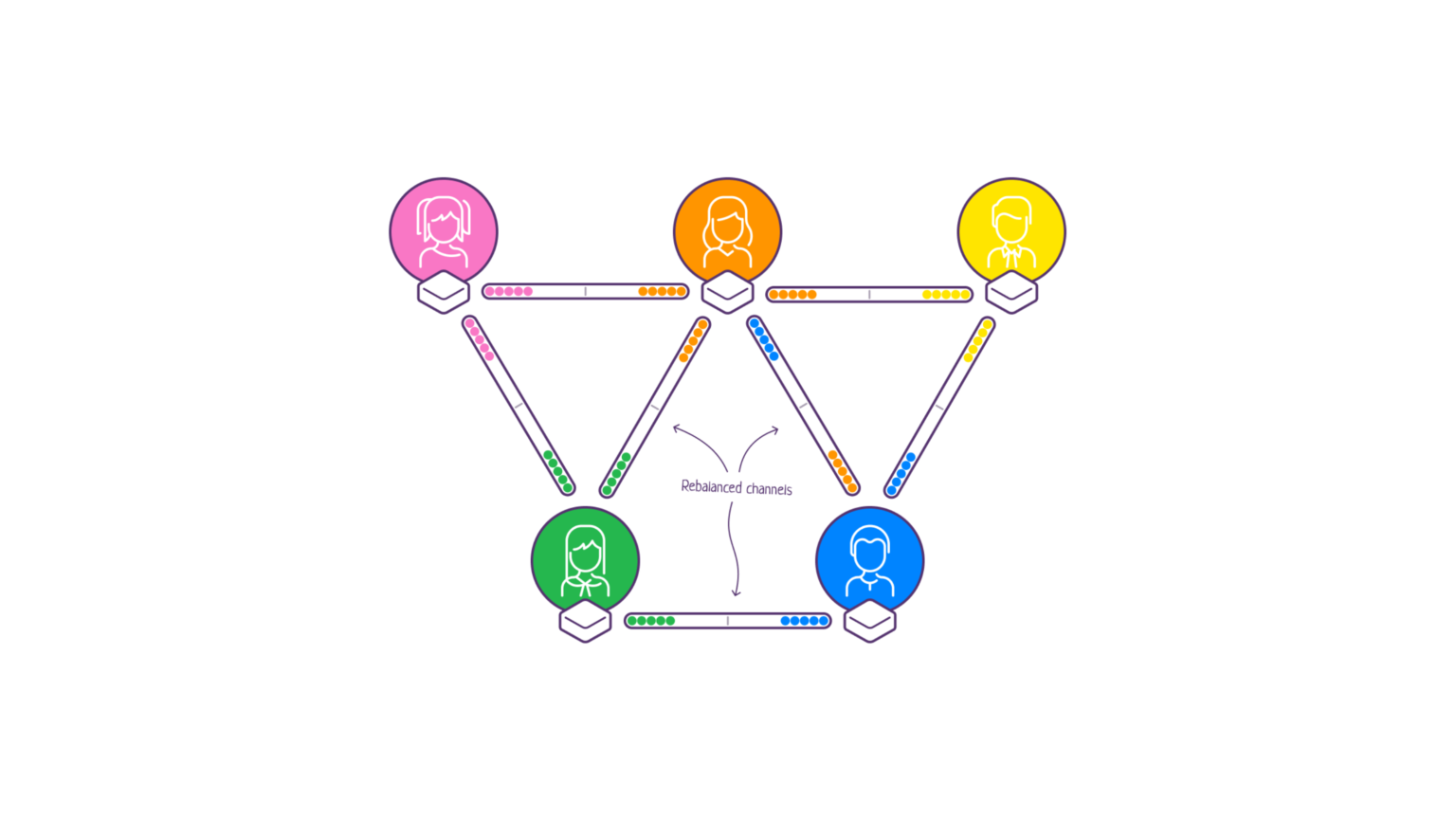
While lightning itself is a tool to reduce the complexities and friction in on-chain transfers, setting up lightning nodes and running them can be technically demanding. Lightning as a Service (LaaS) refers to a business model where third-party service providers offer Lightning infrastructure and capabilities to other entities wanting to leverage the Lightning network without having to manage the technical intricacies related to setting up a LN node, maintaining liquidity and channel management.
Node Deployment and Management: LaaS providers deploy and maintain Lightning Network nodes, ensuring uptime, security, and scalability.
API Integration: Clients can integrate the LaaS APIs into their applications or platforms, which enables them to send and receive Lightning transactions seamlessly.
Liquidity Management: Providers manage liquidity within the Lightning channels, ensuring efficient routing and reducing transaction failures.
Monitoring and Analytics: LaaS users can access monitoring tools and analytics to track transaction history, network performance, and more.
(i) Breez

The open-source Breez SDK enables developers to integrate Lightning and Bitcoin payments into their apps without having to spend countless hours trying to master Lightning. It’s an end-to-end, non-custodial, drop-in solution powered by Greenlight, including a built-in LSP, on-chain interoperability, fiat on-ramps, and other services users and operators need.
(ii) Voltage

Voltage is a key infrastructure provider for startups and companies that want to leverage the Lightning network. It is a LaaS provider for enterprises and enables the settlement of real-time payments with near-zero fees, enabling them to send and receive payments while creating new experiences and business models. Voltage serves brands that have payments at the core of their business, such as financial or fintech companies that need a solution to save on money transfer costs and cross-border payments or create micropayment experiences for the web. It is working with Google Cloud to expand hosting providers and locations.
They offer other products and APIs like Voltage Surge, Voltage Flow and Nostr toolkits which can be very useful for enterprises.
Surge is a node analytics dashboard that helps enterprises to monitor their node’s performance and optimize their operations. It gives fee and reliability recommendations by monitoring node activities, and users can receive automated alerts downtime and low liquidity. Users are charged based on usage of API credits, 1 of which is consumed while processing a data point from your lightning node.
Voltage Flow is a LSP that provides instant liquidity with on-demand channels for any node. Even nodes not on voltage can access Flow to get instant inbound and outbound liquidity by adding automatic and unlimited just-in-time channels, which allows developers get production ready in minutes.
The Nostr Toolkit allows users to create their own NIP05 username, get Zaps to their Lightning node and use the NIP05 as a Lightning Address.
(iii) Tidebinder

Tidebinder is Lightning as a Sovereign Service (LaaSS) that offers fully managed Lightning Network payment APIs, where customers control their own keys. It is building solutions to simplify Lightning network integrations on scale, and aims to make using Lightning as easy as consuming cloud-based servers. Their clients can focus on their core business without needing to spend resources on channel and liquidity management while maintaining sovereign control over funds.
Daniel Wingen, the co-founder, has been instrumental in leading the EINUNDZWANZIG movement, and holds deep expertise in alternative financial systems. With an emphasis on sovereignty, Tidebinder is an open-source foundation that allows users to hold their own private keys.
(iv) Lightspark

Lightspark is a leading LaaS provider that has helped companies like Coinbase, Bitso and Nubank among others to seamlessly integrate lightning solutions into their products. It offers simple APIs and SDKs for developers to do this, along with compliance features built on its stack. It also built Lightspark predict, which is an AI model to determine where traffic is backed up to help route transactions more successfully.
It is an ambitious project led by an experienced leadership team. David Marcus, the CEO and Cofounder of Lightspark led all crypto and payments efforts at Meta. Previously, he was PayPal’s president and is a lifelong entrepreneur.
He famously spoke about his vision with Bitcoin and Lightning – “”Bitcoin is poised to become the neutral settlement network and asset globally, uniquely positioned to bridge various real-time domestic payment systems.”
Scaling Lightning depends on capital efficiency, and achieving that means ensuring liquidity is available where and when it is needed. AI can become immensely useful in accurately predicting routes and thus scaling Lightning. In the context of the Lightning Network, many aspects were not well measured. Before optimising a node’s position, developing better measurements were critical.
Lightspark’s ‘conductivity’ metric quantifies a Lightning node’s capacity to effectively transfer value across the network. By optimizing conductivity and dynamically adjusting customers’ connections, Lightspark ensures they are key players on the Lightning network.
2. Payment Processors:
Payment processors are companies that allow businesses and freelancers to accept payments in Bitcoin. Setting up a self-custodial Bitcoin wallet may not be something every merchant or business owner would be technically savvy with, and integrating them with existing payment systems can be complex. These companies make it easy for businesses that want to accept payments in Bitcoin to do so.
(i) BTCPay Server
BTCPay Server is a free and open-source Bitcoin payment processor which allows you to accept bitcoin without fees or intermediaries. It enables users to accept Bitcoin payments on their websites or stores without the need for a third-party intermediary.
The story behind the creation of BTCPay server is an interesting one, and understanding its background helps in understanding its current impact and future potential. Bitpay, a crypto payment processing company which was established in 2011 had dominated the payment processing market.
Nicolas, the initiator of the BTCpay server project, was disappointed when he found that Bitpay was pushing towards centralization and started shilling shitcoins to its customers. He realised that while Bitcoin might be decentralised at the blockchain level, it is hard to program upon. A lot of people end up depending on infrastructure providers like Bitpay, which makes them vulnerable to the kind of attack that Bitcoin is meant to prevent. Hence, he started BTCPay with the aim of providing an easy to host infrastructure that everybody can run so they don’t need those kinds of third party services to run their business.
The project has come a long way since then, and has now evolved into merchants, sovereign individuals, charities etc to accept bitcoin as payments, salaries, donations etc.
It helps charities, non-profits, content creators, and other organisations to accept bitcoin donations in a more private way than the traditional static bitcoin address. It helps them save on fees, cut out the middlemen, and most importantly, protect the privacy of the donors and recipients.
Bringin is a Financial technology company that is building tools to make Bitcoin spendable. Bringin’s plugin on the BTC Pay server is an effective off-ramping solution for businesses, allowing them to accept Bitcoin payments without exposing them to volatility risk by providing instant and low-fee transaction fees.
Businesses can now accept payments in bitcoin and receive a portion or all of this revenue in euros in their bank accounts.
(ii) Opago

Opago is another startup that is making strides in accelerating merchant adoption of Bitcoin by offering Lightning as a Service(LaaS). With traditional fiat currencies failing, more and more people are adopting Bitcoin not just as a store of value but are also willing to use it for making payments and purchases. Opago addresses this demand by offering merchants Lightning POS terminals, which enable them to accept lightning payments in a fast, easy and secure method.
It offers a flat 1% transaction fee, which is much lower than what merchants are used to paying to traditional payment processors. For small and medium businesses, this makes a huge impact on their bottom line, and the savings often get reinvested into building the business.
Merchants who adopt Opago also enjoy Instant payment settlements, transaction reporting. It gives merchants the flexibility to run cashback programs for the end-consumer, and avoid chargebacks
(iii) Zaprite

As a freelancer starting to earn in Bitcoin, I wanted to get paid directly into a self-custody wallet of choice, and I wanted the exchange rate negotiations, email communication, and invoicing to automatically be taken care of… and that’s why I built Zaprite’ – John Magill, CEO, Zaprite.
Zaprite is building solutions for merchants to easily accept payments in Bitcoin and Lightning. It offers connected payment solutions that allow businesses to integrate both Bitcoin(on-chain and lightning) and Fiat payments on their websites or landing pages. It can also be used by freelancers and consultants to create payments requests by issuing business Invoices and generating Payment Links. It provides reporting to businesses and their customers verifying payments have been made/confirmed and also provides the tools necessary for accounting and bookkeeping, tracking the fiat cost basis of each payment. Zaprite allows you to “bring your own wallet” and doesn’t force you to leave your preferred custody set up. Whether custodial or non-custodial, you can accept payments directly to a custody solution of your choice.
(iv) Coinsnap

Coinsnap is a bitcoin and lightning payment plugin which can be integrated with e-commerce stores to allow them to accept payments without having to run their own node. It has an easy integration process for a newbie and does not require any technical expertise. The plugins are available in most of the popular store systems like Woocommerce, Shopify, Shopware etc.
(v) Flash

3. Industry applications:
Every industry has it’s own nitigrities which can be hard for a general service provider to customise. Industry specific applications go a step further to give everyone within an industry a tailor made solution to work with and leverage the benefits of the lightning network.
(i) Sulu

Sulu is a decentralised API management platform built on the Lightning Network. It aims to provide a more efficient, scalable, and secure way for developers to monetize their APIs. Sulu allows developers to create custom APIs and charge users for usage based on a pay-per-use or subscription-based model using the Lightning Network.
Sulu has built its business logic around a protocol called L402, which has its roots in the early architecture of the web, specifically in the concept of the HTTP 402 error code. It was developed by Lightning Labs to address the need for a standardized method of charging for services and authenticating users in distributed networks.
Sulu plays a pivotal role in the ecosystem of the L402 protocol by acting as a reverse proxy that simplifies the monetization of API endpoints. It serves as a bridge between API providers and consumers, leveraging the L402 protocol to enable seamless transactions.
(ii) Synota

Synota is a startup that has developed a platform for automating and accelerating energy bill payments using Bitcoin and the Lightning Network. The company aims to revolutionise the energy billing industry by providing a more efficient, secure, and cost-effective payment solution. By utilising Bitcoin and the Lightning Network, Synota’s platform has the potential to disrupt traditional payment methods and offer a more modern and innovative approach to energy bill payments, especially to miners.
(iii)THNDR

THNDR is a gaming platform built on Lightning, which popularized the notion of earning bitcoin while playing games. Now, the company is streamlining the payment infrastructure for virtual casinos and online sports betting platforms using the Bitcoin Lightning Network.
Games were put on PCs, and have historically been a good way to onboard new people onto a technology. THNDR has rolled out a lot of the classic games like Solitaire, Tetro tiles, Snake, Sudoku etc, which rewards players with sats. It then expanded its offerings to other peer-to-peer games and gambling platforms.
Recently, THNDR launched Clinch, an API that facilitates instantaneous, borderless, low-fee, and peer-to-peer wagering on Lightning. Using Clinch, online casinos, sports books and competitive gaming platforms could level up their payment systems. THNDR is also looking beyond the business-to-customer (BSC) model, as it works to create white label solutions — pre-built products that a company develops and then sells to another company which then uses the product under its own name — especially for sports betting platforms.
3. Off-ramp service provider:
As more and more businesses transition to a Bitcoin standard, it is important to provide them with services that make the transition smooth without shaking their worlds. Businesses accepting payments in Euros have been making payments in Euros. As they start accepting payments in Bitcoin, off-ramp solutions are needed to help them make payments with it. Seamless, reliable and instant conversions from Bitcoin to Euros are a necessary tool to enhance the B2B ecosystem.
(i) Lipa

Lipa is a Swiss company building a non-custodial bitcoin and lightning wallet which enables users to pay and receive sats on-chain or over lightning. They do not hold or track customer funds.
The founders understood in 2021 that it’s harmful for small businesses and merchants to accept bitcoin, given the high transaction fee environment. They built Lipa for businesses to accept payments in Bitcoin. By offering safe off-ramps and low transaction fees, businesses using Lipa wallet can convert the received Bitcoin to Euro conveniently.
(ii) Mt. Pelerin

Mt. Pelerin provides an easy platform to swap between Bitcoin and Fiat currencies on the go with low transaction fees. It works with many popular chains apart from Bitcoin, like ETH and Polygon, and allows swapping between them. They currently support 14 currencies in 171 countries, using a wallet called ‘Bridge’.
By allowing users to self-custody and DCA,Mt. Pelerin not only serves businesses but retail investors who wish to invest in small amounts over a period. Users can buy Lightning sats directly from their cards or bank transfers, and can withdraw almost instantly into their accounts in any supported currencies. Currently, the app takes care of all the complexities of channel and liquidity management, and it plans to soon let advanced users run lightning nodes on the Bridge app.
Bringin
Bringin is a Bitcoin technology company building off-ramping solutions to make Bitcoin spendable. Seamless conversions between BTC and EUR are critical for all players in the marketplace – employees, businesses, and customers. Employees would be more willing to accept salaries in Bitcoin if they had access to an instant safe off-ramp tool. Businesses will be more likely to use and accept bitcoin for payments if they can use the bitcoin as easily as they can use Euros. By making Euro to Bitcoin swaps seamless, Bringin is bridging the banking rails with Bitcoin rails, which is a crucial gap to fill to onboard the next million Bitcoin users.
It’s building a range of other tools to propagate Bitcoin usability as currency. Its virtual disposable debit cards allow users to top up the card with bitcoin and make payments at any online store, regardless of them accepting bitcoin. Its plugin on BTC Pay Server allows merchants to accept bitcoin payments, and receive the sum, or part of it in Euros directly in their bank account.
Bringin is building the first of its kind application using which bitcoiners can connect any lightning wallet on NWC to their IBAN account, and conduct high frequency microtransactions back and forth. It is essentially building a bridge that connects banking rails with bitcoin and lightning rails.
Conclusion:
As more and more businesses transition to a Bitcoin standard, it is important to provide them with services that make the transition smooth without shaking their worlds. Businesses accepting payments in Euros have been making payments in Euros. As they start accepting payments in Bitcoin, off-ramp solutions are needed to help them make payments with it. Seamless, reliable and instant conversions from Bitcoin to Euros are a necessary tool to enhance the B2B ecosystem.
