

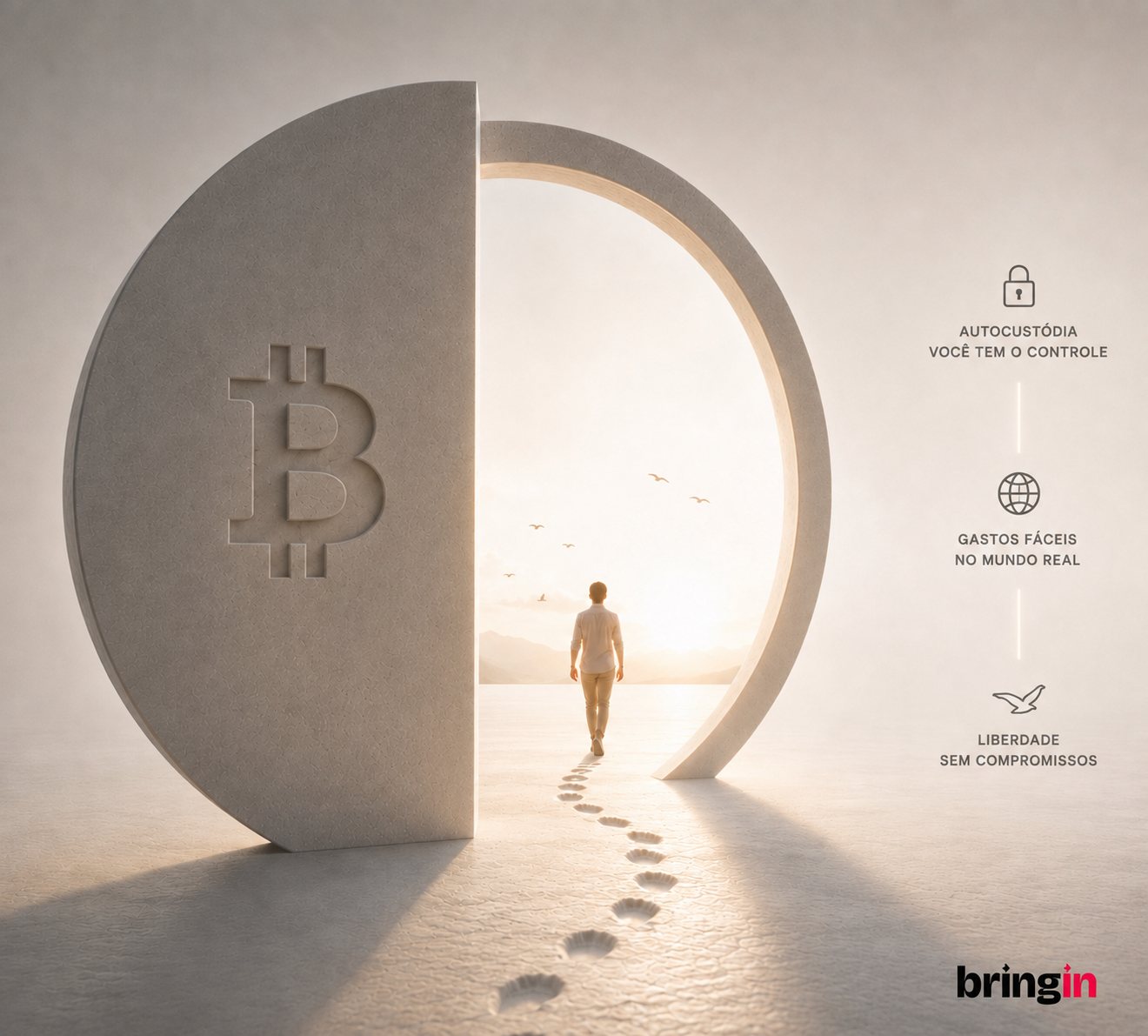
Here's something strange about Bitcoin in 2026.
Almost half a billion people own some. Think about that. Nearly 500 million humans hold a piece of the hardest money ever made. And yet, when those same people want to grab a coffee, pay the rent, or split a dinner bill, what do they reach for? A debit card backed by the exact kind of money Bitcoin was built to replace.
We spent fifteen years teaching the world that Bitcoin is money. Then we taught everyone to lock it in a drawer and never touch it.
And the numbers prove it. More than 70% of all Bitcoin is held by people who plan to keep it for the long haul. Over 60% of it hasn't moved on-chain in more than a year. Here's the wild part: for the first time ever, the amount of Bitcoin sitting completely still for a decade or more is now growing faster than the network can mint new coins.
That's an incredible show of belief. It's also a problem. Because money you never spend isn't really money yet. It's a bet. A position. An asset you're hoping goes up.
Bringin exists to fix exactly this. Not by asking you to hand over a single sat, but by letting you spend Bitcoin straight from any wallet you already own, while your keys stay right where they should: with you.
This is the part most people get wrong about spending Bitcoin. They think to use it, you have to give it up first. You don't. And once you really understand why, you see the gap between owning Bitcoin and actually living on it.
The trap nobody talks about: you were told to pick a side
For most of Bitcoin's life, you got handed a choice that felt impossible.
Door one: keep your Bitcoin in real self-custody. On your own hardware wallet, fully yours, fully sovereign. The catch? It just sits there. To spend it, you'd have to send it off to an exchange, wait, sell, wait again, pull it to your bank, and pray nothing got flagged on the way.
Door two: keep your Bitcoin on some custodial app or card that holds your coins for you. Easy. Fast. Spendable. The catch? It's not really yours anymore. Not your keys, not your coins. You're one frozen account or one policy change away from finding out what custody actually means.
So which is it. Freedom, or convenience. Pick one.
Bringin's whole reason for existing is that this was never a real choice. Like the team says, you shouldn't have to choose between sovereignty and convenience anymore. Your Bitcoin stays under your control, and Bringin never holds it. The convenience comes from the rails around your coins, not from taking your coins away.
That one idea, that you can spend straight from self-custody, sounds small. It isn't. It's the whole foundation for treating Bitcoin like money instead of a museum piece.
What "spend from any wallet" really means
Let's be clear about this, because the phrase gets tossed around a lot.
When Bringin says you can spend from any wallet, it means your Bitcoin never has to live inside Bringin to be useful. You keep it wherever you already trust it. A hardware wallet. A Lightning wallet on your phone. A signing device in a drawer. When you want to spend, you send just what you need, right when you need it, and it turns into euros in real time.
There are a few ways this actually plays out, and each one matters:
From any wallet, straight to your bank. You move funds from your own Bitcoin wallet, and they land in your bank account, fast. Bringin just connects the two. This is the speed story: you can sell Bitcoin from your own self-custody wallet and have euros in your account in under a minute. For years, that one trick was Bringin's quiet superpower, and it's still one of the fastest off-ramps anywhere in the world.
Through a euro account that's genuinely yours. Bringin gives you a real, fully regulated European vIBAN in your own name. This part doesn't get enough credit. Because the account is in your name and fully compliant, you skip the blocks and flags that drive so many Bitcoiners crazy when their money touches the banking system. Your euros, your account, your call.
With a Visa card that works at 150 million shops. The Bringin card, physical or virtual, lets you pay online or in person anywhere Visa is accepted, which is basically everywhere. You hold Bitcoin, you spend without thinking about it. The card holds euros and you can top it up by SEPA, on-chain Bitcoin, or Lightning.
Over Lightning, fast as a tap. Coffee, groceries, a flight, your gym membership. With Lightning and SEPA instant working together, money moves between Bitcoin and euros almost instantly, and you decide exactly when that happens.
Through a self-custodial Lightning wallet you can use without even signing up. Bringin's own wallet keeps your keys on your device. Bringin can't touch your funds, and your payments are private, not monitored. You don't even need to do KYC. You just back up your secret phrase, the way self-custody has always worked.
See the thread running through all of it? It's not a feature. It's a promise: your keys, your coins, the whole way through. Compliance handled properly, sovereignty never traded away.
We already have everything we need. That's the part people miss
This is the bit that should make every Bitcoiner pay attention.
The tools to spend Bitcoin from self-custody, everywhere, already exist. This isn't a someday dream. The Lightning Network was handling over 8 million payments a month in early 2025, with public volume up 266% in a single year. Lightning payments settle in under a second when things are running well, and succeed more than 99% of the time. Merchant payments over Lightning roughly doubled to about 15% of all Bitcoin payments by mid-2024, and kept climbing.
Visa reaches 150 million merchants. SEPA instant moves euros across Europe in seconds. Regulated vIBANs exist. Self-custodial Lightning wallets exist. And Bringin's own milestone says it best: by December 2025, more than 100 BTC had flowed through the platform from real Europeans actually living on Bitcoin, not just talking about it.
So the rails are built. The shops are connected. The wallets are in people's pockets. The only thing missing was a bridge, something that let you cross from "my coins, my keys" to "I just paid for lunch" without ever stepping off the path of staying in control. That bridge is what Bringin built. And it's exactly why the gap between half a billion holders and a tiny handful of daily spenders can finally start to close.
Why this is way bigger than convenience
It'd be easy to read all this as a story about making life easier. Faster payments, fewer bank headaches, a nice card. But that really undersells it.
The real shift here is about what money is even for.
A store of value you can never actually spend without a whole ceremony isn't really competing with the dollar or the euro. It's competing with gold. And gold is great to own! But nobody buys groceries by shaving a sliver off a gold bar at the register. The second you can spend something easily, while still holding it as savings, it stops being a thing you gamble on and becomes money you live on.
Look at all that dormant Bitcoin again, but through this lens. Over 60% unmoved in a year. More than 17% untouched for a decade. We're told this is pure strength, and in one way it is. It shows deep conviction and a refusal to sell into fiat. But it also shows something was missing. People hoard partly because spending used to be painful, and because it felt like betraying the whole long-term plan. Make spending painless and keep it non-custodial, and you don't break that conviction. You complete it. You get to save in Bitcoin and spend in euros, holding the hard money and using it at the same time, with no contradiction at all.
That's the difference between Bitcoin as an asset and Bitcoin as money. An asset asks, "what's it worth, and when do I sell?" Money asks, "what can I do with this today, without asking anyone's permission?"
The Dual Money Era, and what it could do to the world
Bringin has a name for the world it's trying to build. It calls it the Dual Money Era: save and pay in Bitcoin, transact in euros. Hold the money that can't be printed away, while spending through rails the whole economy already understands.
Sit with what that actually unlocks if it happens at scale.
It hands control back to you. Right now, your ability to spend your own money runs through institutions that can freeze it, flag it, or quietly cut you off for reasons you'll never see. Spending from self-custody flips that around. The default becomes yes. Money moves when you say so, from a wallet only you control, into an account in your own name. That's not a tiny upgrade. For people in shaky economies, or under unpredictable banks, or just tired of being treated like a suspect for moving their own money, it's the difference between taking part and waiting for permission.
It makes saving make sense again. When the money you hold is expected to keep its value instead of leaking it to inflation, the whole feeling of a household changes. You're not forced to spend fast or chase risky returns just to stay in place. You can save in something solid and spend the exact amount you need, exactly when you need it. Bringin's roadmap leans right into this, with features like automatic BTC and EUR conversion based on your own rules, so you set the terms and the system just follows.
It rewires how people send money home, and this is where it gets really moving. Bringin's roadmap includes remittance corridors, built to help workers send money home in seconds for a sliver of the usual cost. Think about who that's for. The nurse. The driver. The construction worker sending part of every paycheck across a border, watching a tenth of it or more disappear into fees and delays. Bitcoin rails plus instant local settlement can cut that down to almost nothing. This isn't abstract freedom for die-hards. It's real money, kept whole, reaching the families who actually need it. And if you're reading this, that corridor isn't a line on a roadmap. It's personal.
It builds an economy that doesn't run on quietly losing value. A world where regular people both save and spend in sound money is just structurally different from one built on currencies designed to lose value over time. It rewards patience over panic, ownership over debt, and your control over some gatekeeper's. You don't have to be a hardcore maximalist to think that's a healthier foundation than what we've got.
And none of this asks you to become a cryptographer. That's the whole point. The sovereignty is real, the keys are yours, but the experience is just: tap, pay, done..
The vision behind it, and why it matters who builds this
Tools like this don't just appear. Someone has to build them, and someone has to refuse the easy version.
Bringin was started in Tallinn back in 2022 by Prashanth Chandrashekar, on a simple belief: people should be able to live entirely on Bitcoin. Not invest in it. Not speculate on it. Live on it. Bootstrapped, focused, and stubborn about it, the team spent its early years building the unglamorous stuff almost nobody else wanted to touch. The fastest self-custody off-ramp in the world. The regulated vIBAN. The licensed infrastructure. The card. The wallet.
What makes the vision believable is what it won't bend on. Bringin says it straight: financial sovereignty isn't up for debate, your Bitcoin stays yours, and self-custody never gets traded away for convenience. Compliance comes first, always inside the legal lines, because freedom that gets shut down by regulators isn't freedom, it's a stunt. And underneath all of it is something Prashanth's team calls truth over optics. Less marketing fluff, more real value. Actually being innovative instead of just looking like it.
That attitude is the difference between a company that wants you holding Bitcoin forever so they can hold it for you, and one that wants you actually using your own money. Bringin is built so that the more sovereign you are, the better it works. And the investors behind it, including some of the most Bitcoin-native firms out there, are betting on the same idea: that the future belongs to whoever lets people hold hard money and spend it freely, at the same time, without asking anyone.
The recognition has followed too. Bringin's been covered by Bitcoin Magazine, Nasdaq, Benzinga, and others as it went live across 28 countries. But the number that matters most is the boring one. Real Bitcoiners, moving real Bitcoin, from their own wallets, into their own lives.
Como será para você, a partir de hoje
Esqueça a filosofia por um instante. Apenas imagine uma manhã comum.
Você acorda com suas economias em Bitcoin, na sua própria carteira física, com as chaves em suas mãos. Você compra um café com um toque. O valor exato é convertido de sats para euros em tempo real e a transação é concluída em menos de um segundo. No almoço, você divide a conta via Lightning. À tarde, você paga o aluguel e os euros caem na conta do seu proprietário diretamente do seu vIBAN em seu próprio nome. Sem alertas, sem atritos. À noite, você envia dinheiro para a família no exterior e ele chega em segundos. Em nenhum momento do dia seu Bitcoin saiu do seu controle até o exato momento em que você decidiu gastá-lo. Em nenhum momento você pediu permissão a ninguém para usar seu próprio dinheiro.
Isso não é uma promessa sobre o futuro. Cada parte desse dia já funciona agora.
O meio bilhão de pessoas que possuem Bitcoin já tomou a decisão difícil. Elas escolheram possuir o dinheiro mais sólido que já criamos. A única coisa que falta é viver de fato com ele, sem abrir mão do controle que tornou o Bitcoin valioso em primeiro lugar.
Você já tem o ativo. A Bringin é como ele se torna dinheiro.
----------------------------------------------------------------------------------------
Gaste Bitcoin de qualquer carteira, mantendo suas chaves em suas mãos o tempo todo. Comece a gastar hoje em bringin.app, ou para valores maiores e atendimento personalizado, conheça o Bringin Private.
